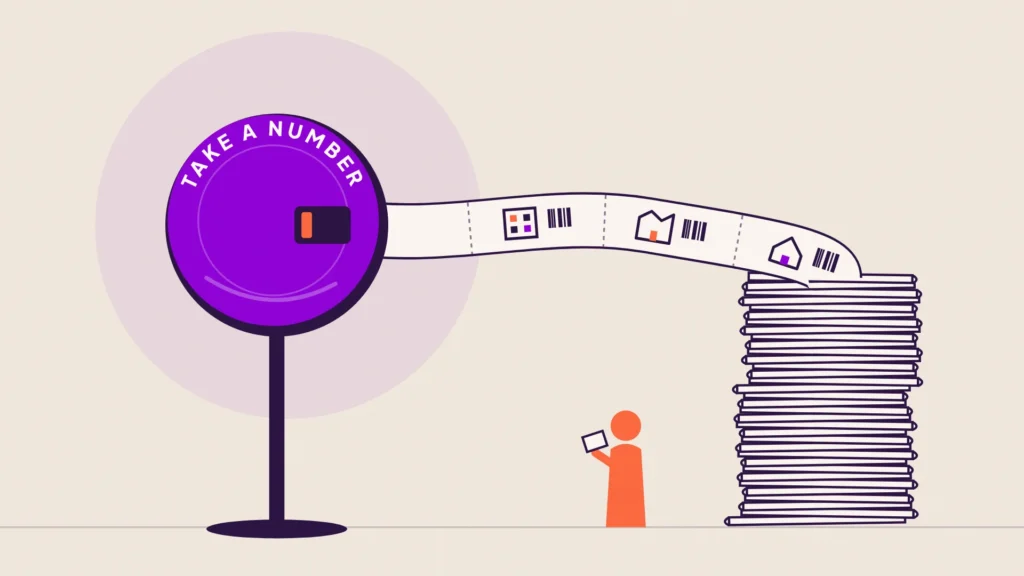
You register for social housing in Flanders through the Central Registration Register (Centraal Inschrijvingsregister, CIR) at ikwilsociaalhuren.wonen.vlaanderen.be. You log in with itsme or your eID, fill in your household, income, property and housing wishes, and every adult moving with you confirms the application. You are then put on the waiting list of the housing company (woonmaatschappij) in your region, which offers you a home as soon as it is your turn.
Below you can read what to check beforehand, what to have ready, how to fill in the online form and, above all, which choices determine how quickly you get an offer. The amounts apply to 2026.
Registration in five steps
- Check the conditions. Income, savings, property, language and registration in the population register.
- Get your details ready. National register numbers of your household members, payslips and any certificates.
- Complete the online file in the CIR. Much of it is already filled in; you add the rest and choose your regions.
- Have every adult confirm. Only then is your registration complete.
- Wait for an offer and keep your file up to date until the housing company contacts you.
Do you meet the conditions?
The register checks most conditions automatically through government databases. If you do not meet them, the system rejects your file. So check them yourself first. You will find a detailed explanation of each condition in our article on the conditions for renting social housing.
| Condition | What applies in 2026 |
|---|---|
| Age | You are 18 or older. Separate rules apply to younger applicants. |
| Income | Your indexed household income from three years ago stays below the limit: €31,361 for a single person, €33,988 for a single person with a disability and €47,039 in all other cases, plus €2,629 per dependant. |
| Savings (means test) | The positive balance on your current, savings, term and securities accounts stays below the same amounts as the income limit. You declare this on your honour. |
| Property | You do not fully own or hold full usufruct of a home or building plot, in Belgium or abroad. |
| Register | You are registered in the population register or the foreigners’ register. |
| Language | You meet the language requirement. Anyone who has become a tenant since 2023 must have basic Dutch at A2 level, no later than two years after the start of the tenancy, unless exempt. |
| VDAB | If you do not work as an employee or self-employed person, you must under certain conditions register with VDAB. |
The amounts come from the Flemish government’s page on the means test. They are indexed every year, so check them if you register in 2027.
What to have ready before you start
You do not have to upload supporting documents straight away: you can continue and add them later. Having everything to hand does make registration go more smoothly.
- itsme, or your eID with PIN code and a card reader.
- The national register numbers of everyone moving with you.
- Your payslips for the last six months, or a certificate of your benefit or living wage.
- Certificates showing your situation, such as a recognised disability, a pregnancy or adoption, a planned family reunification or a recognition certificate for informal carers.
- Do you own a home abroad or part of a home? Then the documents showing why you cannot live there.
Exactly which documents you need depends on your situation. Your housing company can tell you in advance.
The online form, screen by screen
After logging in, click “Ik wil me inschrijven” (I want to register). Wonen in Vlaanderen immediately retrieves the details the government already holds about you. Required fields are marked with a red asterisk, and each screen has a short instruction video.
Personal details
You see your household composition. Untick household members who are not moving with you and add anyone who is missing using their national register number. Expecting a baby, or planning an adoption or family reunification? Add that person via “bewoner toevoegen” (add occupant). Do you give or receive informal care (mantelzorg)? Tick it and state the municipality: it counts in the allocation.
Income and savings
Your income is retrieved automatically. Add anything missing, such as income from abroad, maintenance paid, budget management or collective debt settlement. For the means test, you declare on your honour whether your balances are below the limit. A false declaration can lead to a fine or prosecution.
Property
The register compares your answer with the land registry. If you own a home anywhere, state why you cannot live there. You can read more about the land registry in our article on cadastral income.
Housing preferences and region
This is where you have the most influence on your waiting time. You choose the maximum rent, the types of home (room, studio, flat, house), the number of bedrooms and the municipalities or neighbourhoods where you want to live. Every restriction you add shrinks the pool of homes you are eligible for. Also choose the housing company that will handle your file, preferably the one in the municipality where you live.
Help and overview
Indicate who helped you, such as a family member, the OCMW (public social welfare centre) or the CAW, and give your own email address. On the overview screen you check everything, tick the declarations and submit.
Important: every adult in your application must then log in themselves and confirm that they agree. Until that has happened, you are not registered.
Who gets a home first?
The waiting list is not strictly first come, first served. When a home that suits your household becomes available, the housing company looks at candidates in this order:
- Local connection. If you have lived in the municipality continuously for at least five of the last ten years, you get an offer first. Some municipalities set stricter rules in their local allocation regulations.
- Informal care. If you give or receive informal care from someone who lives in the municipality, you move up.
- Waiting time. Within the same group, whoever has waited longest gets a home first.
A housing company can also allocate a home on a fast-track basis, for example in cases of homelessness or domestic violence, and it reserves homes for target groups such as people over 65 or people with a disability.
Nobody can tell you in advance how long you will wait. It depends on how many homes become available in your municipalities, how many candidates are waiting and how many of them have priority. In early 2025, according to Flemish housing minister Melissa Depraetere, 199,085 prospective tenants were on the waiting list, a record (VRT NWS). You ask your housing company for your place on the list, not the register.
How to improve your chances of a quick offer
- Choose broadly. Tick as many types of home, municipalities and housing companies as you would genuinely be willing to move to. The Flemish government itself recommends this.
- Choose your own municipality and previous municipalities. You may have a local connection there, and that carries the most weight.
- Limit your specific preferences. Asking for a terrace or an extra bedroom is possible, but every preference shrinks the supply.
- Do not ask for a bigger home than your household needs. You will usually not be allocated a home with more bedrooms than occupants, and it shrinks your supply.
- Keep your file up to date. Change a move, a new baby or a different living situation straight away via “Mijn woningaanvraag” (my housing application).
After you submit
The housing company checks your file. If a supporting document is missing, it will ask for it. While it is reviewing your file or while you have an offer, you cannot change anything yourself: the fields are then greyed out.
The register automatically updates your file once a year and checks again whether you meet the conditions. If you receive a letter, reply within the deadline it states, usually 30 days from the postmark. If you do not reply, you lose your file, your accumulated waiting time and possibly your rent premium. A file that has been inactive for two years and to which you do not respond is deleted.
You receive an offer
The housing company contacts you with a specific home. If you accept, you get a nine-year lease and pay a rental deposit at the start. Together with the landlord you also draw up an inventory of fixtures. The rules that apply after that are explained in our guide to the rules for social renting (in Dutch).
You may turn down one offer. If you refuse a second time, the housing company removes your registration and you start again at the bottom of the list. If you temporarily cannot move, for example because of a long hospital stay, provide proof. If you believe your refusal was justified and the housing company disagrees, you can file a complaint with the Toezicht (supervision) department of Wonen in Vlaanderen.
What changes in 2026?
- A single rent calculation. From 1 July 2026, the same rent calculation applies to all new social tenants. Further roll-out follows in 2027, including for existing tenants.
- Stricter rules in the pipeline. A draft decree from the Flemish government raises the required level of spoken Dutch for new social tenants to B1. Prospective tenants who are not in work but able to work would have to register with VDAB and be available for the labour market (KennisWest). At the time of writing, this decree had not yet come into force.
What you can do while you wait
If you rent on the private market in the meantime and have been registered with the housing company in your municipality for at least four years, you may be entitled to the Flemish rent premium. So always register for the municipality where you live now as well. If you are looking for something affordable in the meantime, also take a look at budget rents.
Frequently asked questions
Can I register without a computer or itsme?
Yes. If it does not work online, visit your housing company: they will help you. A welfare organisation or someone you trust may also help you. The free number 1700 helps with logging in, but cannot see your file.
Can I register with several housing companies?
Yes, in the register you choose several municipalities and housing companies. You do all of this in the same file.
How do I find out my place on the waiting list?
Ask your housing company. Some have an online module for which you need your national register number and your file number from the register.
What if my savings are above the limit?
Then you cannot register. The means test has applied to new candidates since 1 January 2024 and looks at the positive balance on all your accounts.
Is there social housing without a waiting time?
Not as a fixed rule. Only in emergencies can a housing company allocate a home on a fast-track basis, and it decides that itself.
You cannot choose the waiting list, but you can choose your regions
You cannot speed up how many homes become available, but you do determine how many homes you are eligible for. If you register broadly, tick your own municipality and confirm your file on time every year, you get the most out of the same waiting list. If you are unsure about a condition or document, call your housing company before you submit: a rejected file costs you more time than one phone call.